Retailers of Magnificent French woven & Silkscreen Tapestries using traditional Jacquard looms, fully woven, numbered
& signed by master weavers

 
Tapestry Catalogue
           
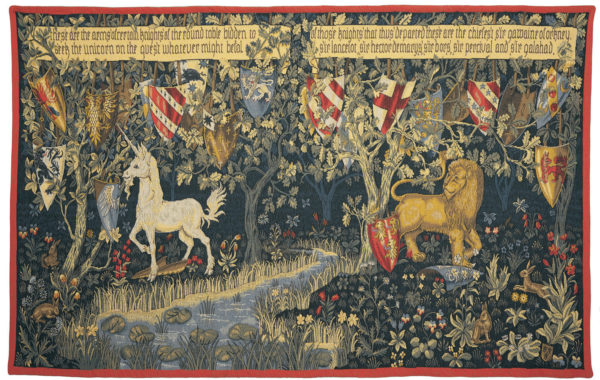
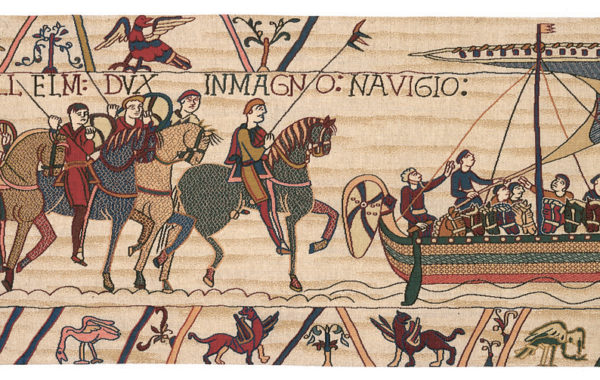
11th and 15th Century Chivalry   Norman & Medieval   Medieval 'Mille Fleur'
               
Silkscreen   Renaissance   Verdures & Aristolicia
               
Landscapes Pastorals & Maritimes   18th & 19th Century Decoratives   English & William Morris Series
               

Fleur de Lys Tapestries can be contacted on:-

Phone 03 9803 4419
Mobile 0407 526 186
Leave a message for Fleur De Lys Tapestries at our e-mail address Tapestries e-mail

home  galleries  about tapestries  hanging & care  prices
slideshow

The Beauty of Tapestries

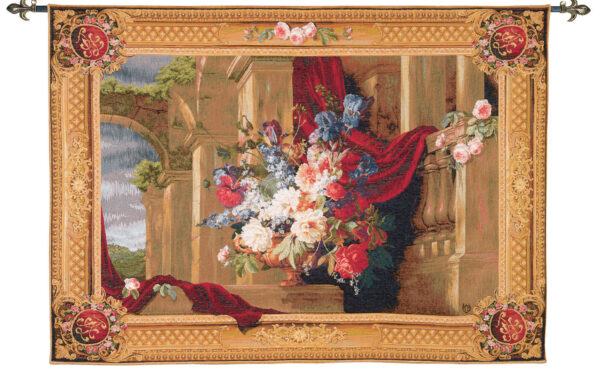
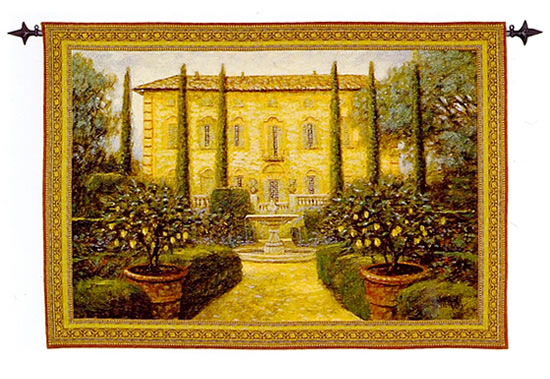
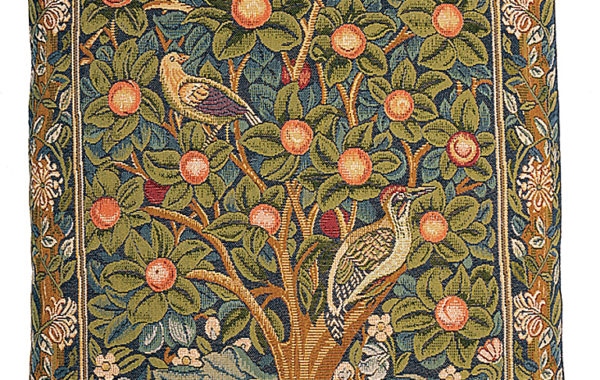
These tapestries have been hand picked as being the most beautiful and most artistic of all the tapestries made by French weavers. Tapestries are magnificent and are suitable for entrance halls, dinning areas, lounge rooms and other areas of your home where an object d'art can be appreciated.

The tapestries are either silk screen or woven. Silk Screen tapestries are reproductions of the original tapestries hanging in places such as the Louvres, Chateaux in the Loire Valley and in private homes in Europe. These tapestries are quality tapestries with the emphasis on recreating the atmosphere and visual impact of the classic masterpieces.

The woven tapestries are actual woven tapestries of the original tapestries with an emphasis to the Renaissance period.

Both types of tapestries are ideal investment and heirloom pieces, which are major talking points in any house or office. Due to the nature of tapestries, nobility and scholars throughout history have collected and preserved these works of art. Now you can see these works of art in palaces and museums throughout the world. Or you can own a piece of history and culture to savor and preserve for yourself. Here are most of history's finest tapestries reproduced for you. Each tapestry comes in different sizes as detailed in the enlargements. These tapestries are the finest made in the world. We hope you enjoy them as much as we do.

The Silkscreen Process

This method of reproducing the original tapestries enables very authentic replicas to be created, with a genuine patina or "aged' appearance. Tapestries produced by this method are particularly effective in period properties and in situations where an ancient look is required.
The woven fabric of which the tapestry is composed has an irregular texture which closely simulates the antique tapestry stitch. The design is then produced by means of each colour being individually applied through silkscreen by hand. Approximately sixteen colours are used in this process, commencing with the lightest colours in the tapestry, gradually working through to the darker colours, thereby building up many subtle shading effects and colour-tone gradations.
Tapestries created in this way are entirely made by hand, involving a very lengthy production time, and the results are undoubtedly the most authentic copies of the original tapestries as we know them today.

The Weaving Process

Hand woven tapestries are produced on Jacquards looms. These ancient oak-framed looms are replicas of the loomsbuilt in 1757 by Jacques de Vaucanson (1709 - 1782). The operation is entirely by hand, demanding great skill on the part of the master weavers.
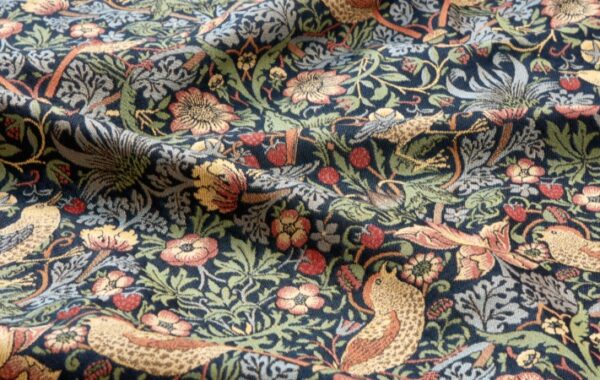
Tapestries are composed of wool, cotton and silk. The wool provides an ancient appearance, the cotton is used to give strength, and the silk is used to create highlights in various parts of the tapestries such as clothing and the flowers. The composition of these materials differs depending on the tapestry being woven.
The final product has a unique lustre and beauty, and is the result of much patience, skill and attention to detail on the part of the master weavers who continue this tradition.

History

Tapestry is one of those French traditions which, through the centuries, has made a rich contribution to the beauty of French heritage.
In the Middle Ages (13th and 15th centuries), until the Hundred Years War, the Ile-de-France was the leading producer of tapestries with Paris the undoubted capital. Then the war and the systematic plundering of towns sent the tapestry makers fleeing northwards where they founded the Ateliers d'Arras (Arras studios). When Arras was pillaged, they went on towards Flanders which became their new centre.
These tapestry makers, true craftsmen worked in family concerns, wove mythological scenes and later on, medieval scenes, taking their inspirations from the translations of Greek and Latin texts.

Medieval Age

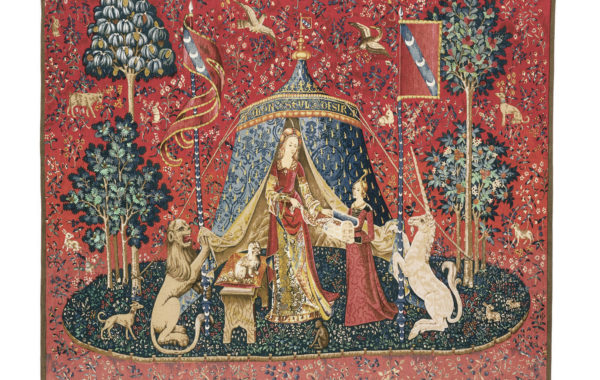
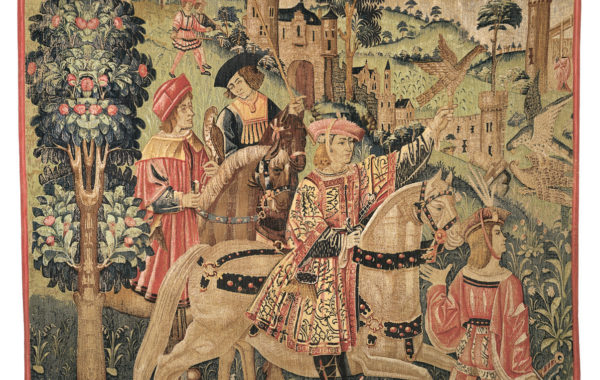
Towards the end of the 15th century, the Val de Loire became a popular place for tapestry makers, and it was in this "cradle of French kings" that the most prestigious works were made, now found in museums. This wasthe period of the "Mille Fleur" tapestry, with rural scenes overflowing with freshness and charm, where gentle ladies, lords and peasant folk frolic on a background of "bord de Loire" flowerets. Perhaps some of the finest examples are the series of the Lady with the Unicorn tapestries, which hang at the Cluny Museum in Paris.

The Age of Chivalry.

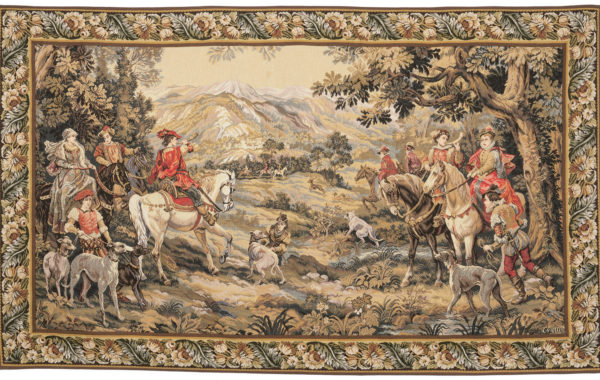
The end of the Middle Ages saw appearance of epic scenes. Kings and princes had tapestries woven of their tournaments, combats, victories and even their hunting parties. This period remains the most prolific for unrivalled masterpieces.

Renaissance

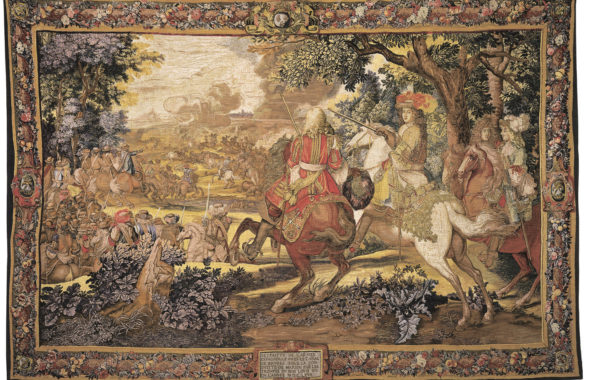
With the Renaissance and the arrival of the Italian artists, tapestry radically changed style. Associating painting and tapestry, Raphael introduced the art of compositions, order, clarity, perspective, décor and the rich borders and arabesques that characterized the highly coloured style of the Renaissance period.

Around 1530 in France, Francois 1 foundered the first royal tapestry factory in Fontainebleau, near Paris. Around 1660 Colbert established the royal factory of Les Gobelins, then Beauvais 4 years later, under the protection of Louis XIV. More than 800 tapestry makers could be seen at the Gobelins in Paris, under the direction of Chares Le Brun, whose idea was to group the artists according to their various talents and tastes. This is why it was not unusual to find panels signed by several different artists.

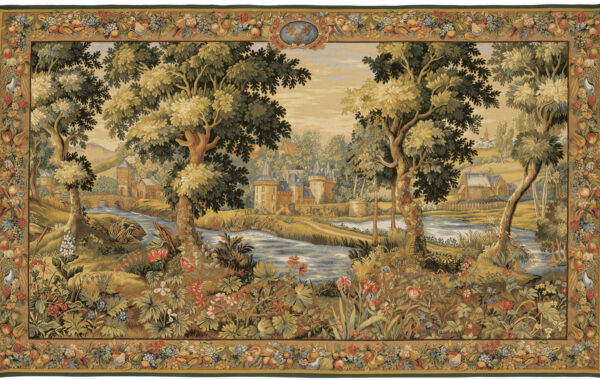
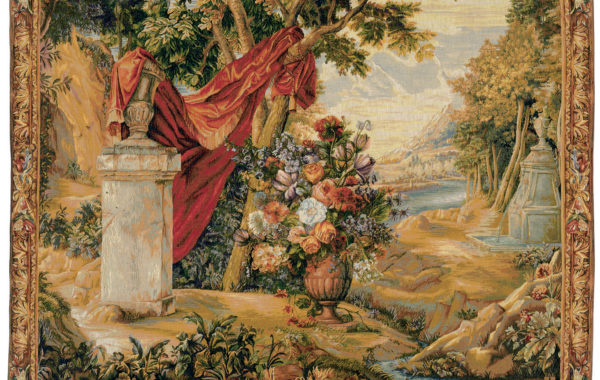
After the death of Louis XIV, the official formal subjects disappeared to give way to more imaginative subjects. Tapestry weaving became more romantic with beautiful landscapes. This style reach its peak with Boucher.

The French Revolution put a stop to the creative genius of the tapestry makers, but in 1795, Beauvais,Aubusson and Gobelins reopened, and until the 19th century reproduced the designs of great artists of the royal factories.

To-day, although there are more than five centuries between us and the first major works woven by these tapestry makers, we are proud to be able to offer all art lovers, genuine collector's items to decorate a room, whatever the style or the size of the interior.

These works of art, painstakingly created by these artists are presented in our gallery.